Which cherries should you choose for clafoutis?
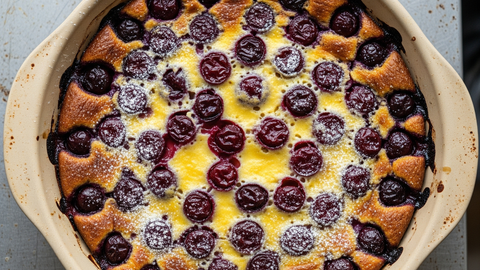
For a great clafoutis, pick ripe cherries that are sweet but still firm. Early-season varieties like Burlat are perfect, as are Summit or Van a little later. Their flesh holds up in the oven and they release just enough juice to keep the clafoutis soft without soaking the batter.
If you want to stay true to tradition, the clafoutis from the Limousin region was originally made with small, deeply fragrant black cherries. They're fairly rare now, but if you're lucky enough to find some from a grower or at a market, give them a try.
If you like your desserts a little tart, sour cherries such as Montmorency are an excellent alternative. They're less sweet than sweet cherries: just add 1 extra tablespoon of sugar to the batter to balance the flavours.
To pit or not to pit: the debate that'll never be settled
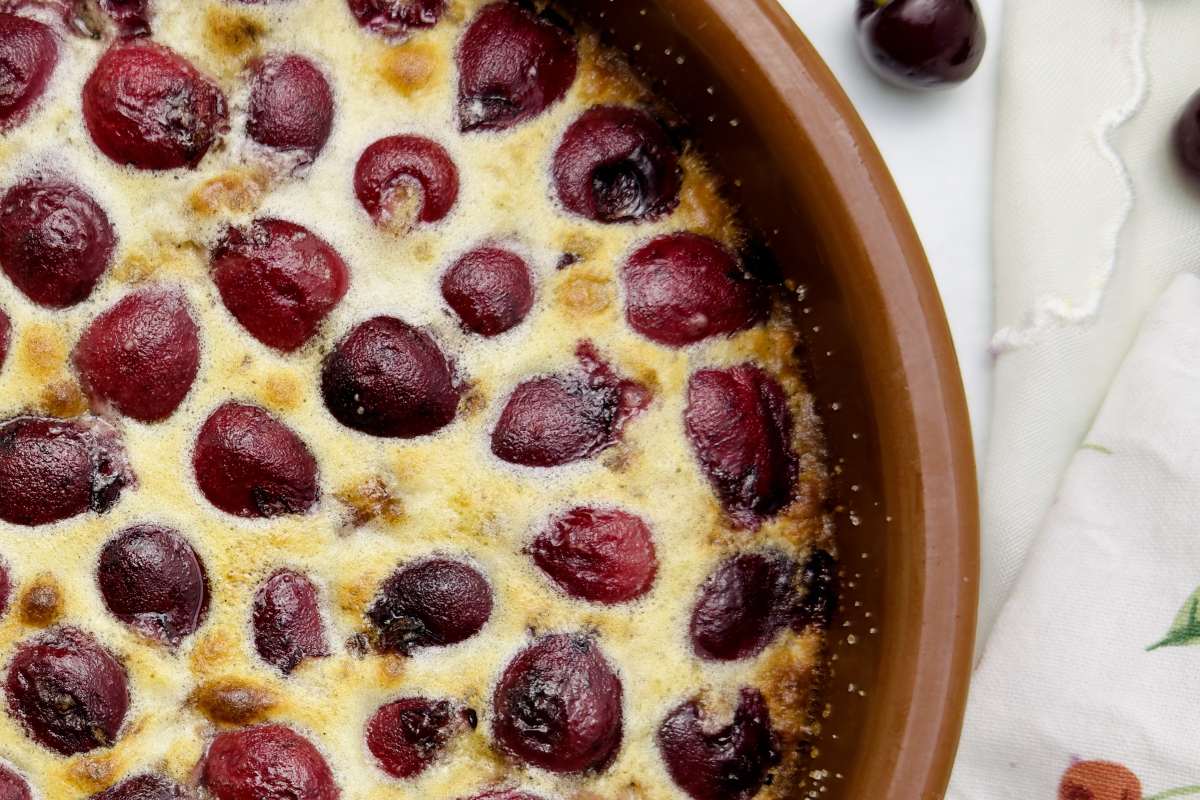
This is THE clafoutis question, and it'll always spark a debate. The Limousin tradition, the clafoutis heartland, is firm on this: you keep the pits. Whole cherries release less juice as they bake, and the pit lends a subtle almond note to the batter.
Sorry, purists: I take mine out. A clafoutis you can enjoy without watching every bite or spitting out pits is so much nicer, especially with kids at the table. That said, I won't lie to you: it's an extra step, and a bit slow. I don't even own a cherry pitter, I just push the pit through with a straw. Go gently, though, or the cherry juice squirts everywhere and stains the counter (and sometimes your clothes!). Ten minutes of patience, well rewarded at the table.
Which dish should you use?
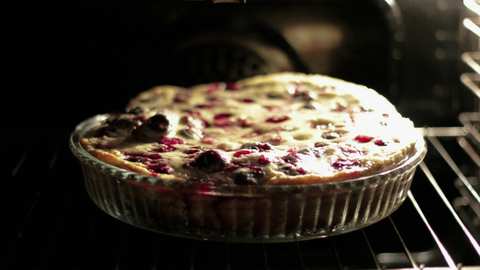
For this recipe I used a round 22 cm (about 9-inch) dish. To me, it's the ideal size for a clafoutis that's nice and thick, soft and custardy all the way through.
A round dish is the traditional shape and perfect for serving straight to the table, since clafoutis usually isn't turned out. And that's exactly what I'd recommend: with a dessert this soft and fragile, the easiest option is to leave it in its dish and serve it as is, no stress, no breakage. If you'd rather present it unmoulded, that's possible too, but it takes a few precautions. Go for a ceramic or glass dish, which spreads the heat gently and bakes evenly.
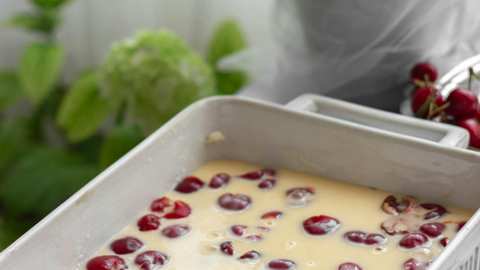
That said, nothing stops you from using another shape. A square or rectangular dish gives a slightly thinner clafoutis that often bakes faster. A loaf tin gives a taller, more unusual version, ideal for slicing, even if it's not the traditional look. You can also make individual clafoutis in ramekins or small gratin dishes, perfect for a plated dessert.
Whatever dish you choose, just adjust the baking time: the more spread out the batter, the faster it cooks; a deeper dish will need a few extra minutes. Either way, trust the knife test, inserted in the centre, it should come out clean.
Variations: the same batter, every fruit of summer
Purists will tell you: without cherries, it's no longer a clafoutis but a flognarde. Whatever the name, this batter works with every stone fruit from May to September. One rule only: use the same weight of prepared fruit as the cherries, 400 to 500 g.
| Fruit | Amount | Preparation | My tip |
|---|---|---|---|
| Apricots | 8 to 10 depending on size (≈ 500 g) | Halved and pitted | More tart than cherries: add 1 tbsp sugar if they're not fully ripe |
| Peaches / nectarines | 4 to 5 fruits (≈ 500 g) | In wedges; peel peaches, keep the skin on nectarines | They release more juice: pat them thoroughly dry |
| Plums / damsons | 10 to 12 (≈ 500 g) | Halved and pitted | Late-summer damsons hold up better in the oven than greengages |
| Blueberries | 400 g | None: just wash and pat them dry | The easiest fruit of all, nothing to pit or cut, great with kids or when you're in a hurry |
A lighter, dairy-free or gluten-free version
Good news: clafoutis is already one of the more sensible summer desserts. To lighten it further, drop the sugar to 80 g (ripe cherries make up for it easily) and use semi-skimmed milk. Don't touch the eggs: they're what gives the structure.
Dairy-free: replace the 250 ml of milk with the same amount of plant-based milk, and the butter for the dish with margarine.
Gluten-free: replace the 100 g of flour with the same weight of cornflour or rice flour, the custardy texture actually turns out even softer.
Storing and serving: warm or cold?
Clafoutis keeps for 2 to 3 days in the fridge, covered with cling film, right in its dish. Don't leave it out at room temperature for more than a few hours: it's an egg-and-milk custard. I'd avoid freezing it: the batter releases water as it thaws and loses all its softness.
To enjoy it warm the next day, 10 minutes in a 150°C (300°F) oven is enough; never the microwave, which turns it rubbery. And cold, its texture firms up like a set custard: both camps are right.