 Written by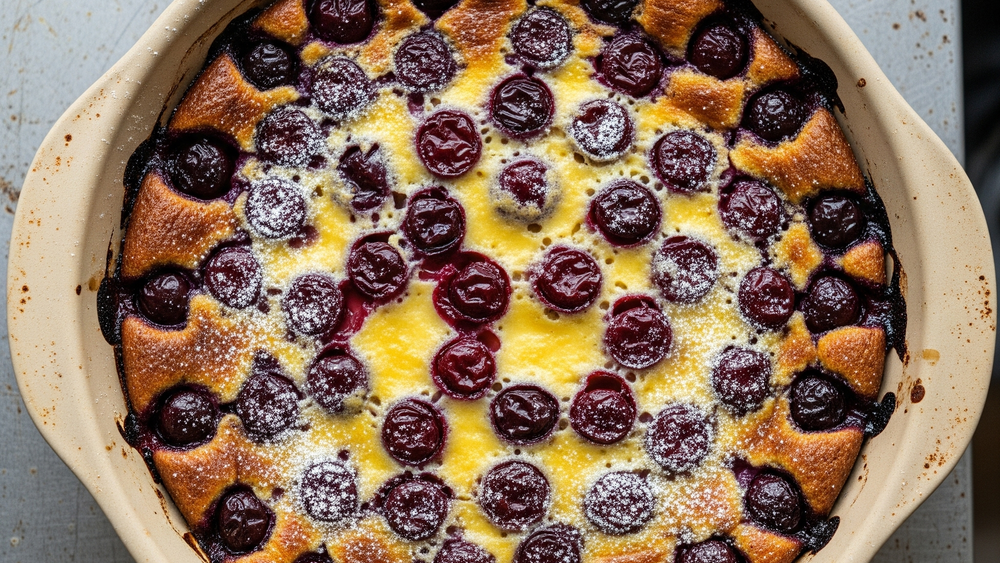
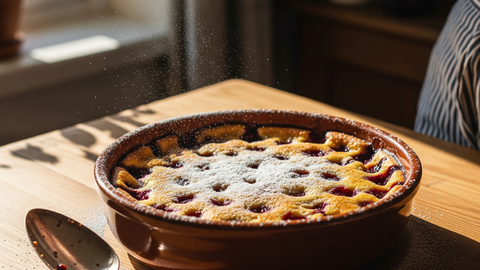
Clafoutis is a summer dessert staple. Moist, fruity, and simple to make, it's a classic we love to prepare any time of year.
However, one question often comes up: should you add baking powder to clafoutis? Here's a complete article to clear things up.
Why Does This Question Often Arise?
The texture of clafoutis can vary from one recipe to another: some prefer a dense and creamy clafoutis, while others like it lighter and airier. The presence or absence of baking powder is often at the heart of this variation.
The confusion stems from the fact that clafoutis sits between two worlds: that of crepes, without leavening and that of cakes which usually contain it. Hence the legitimate hesitation among lovers of this delicious dessert.
The Traditional Clafoutis Recipe: No Baking Powder
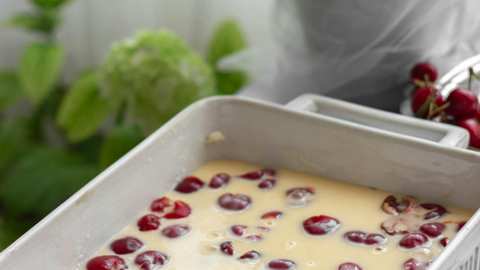
Historically, traditional clafoutis does not contain baking powder. Its texture is achieved with a simple mixture of eggs, milk, flour, and sugar. This mixture is poured over fruit (cherries, plums, blueberries...) and baked gently in the oven.
This version yields a dense, slightly creamy clafoutis, similar to a custard. It's the one found in authentic recipes, passed down through generations.
Personally, I never add baking powder to clafoutis: I find that the recipe is perfect as is, with no need for it to rise.
Can You Add Baking Powder?
Of course, nothing prevents you from adding a small amount of baking powder if you want a lighter, airier texture. This results in something closer to a fruity cake.
Key Takeaways:
- For a classic clafoutis: no baking powder.
- For a lighter, risen clafoutis: 1/2 packet of baking powder can be added.
It's a personal choice, and there's no "wrong" way to go about it. You're simply deviating from tradition by adding baking powder, but that's perfectly fine: the main thing is to enjoy yourself.
How Much Baking Powder Should I Use if I Choose to Add It?
If you want to try the version with baking powder, half a teaspoon of baking powder for a medium-sized pan is sufficient. The idea is to lighten the batter without turning the clafoutis into a full-fledged cake.
Does Baking Powder Change the Taste of Clafoutis?
No, baking powder does not add any particular flavor. What primarily influences the taste are the fruits, the quality of the ingredients (vanilla, sugar, milk), and the baking process.
Baking powder only impacts the texture, not the flavor of the dessert.
My clafoutis recipes
Ready to give it a go? Here are a few of my clafoutis recipes:
Conclusion
In summary: adding baking powder to clafoutis is a matter of preference. To respect tradition, avoid it. For a lighter touch, feel free to add some.
And to ensure your dessert is a complete success, don't forget that how you unmold clafoutis also matters: proper unmolding helps preserve the beauty and integrity of this simple yet delicate dessert.