 Written by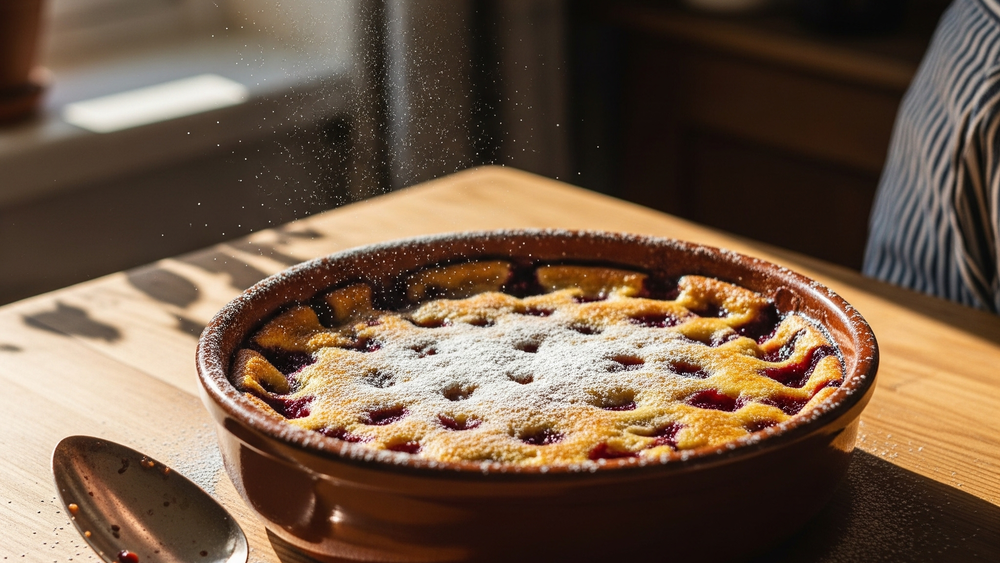
The clafoutis, this delightful, melt-in-your-mouth fruit dessert, is often associated with cherries but now comes in many variants (apples, blueberries, apricots, pears...).
But one question keeps coming up: how do you successfully unmold a clafoutis without damaging it? If you've ever ended up with a broken clafoutis or one stuck to the dish, this article is for you.
Why is unmolding a clafoutis a real challenge?
Clafoutis is a dessert with a fragile texture: half-cake, half-flan, it's naturally moist and can break if handled improperly. Some prefer to enjoy it directly from its dish, but if you want a more refined presentation, successful unmolding becomes essential.
An immaculately unmolded clafoutis is a more elegant dessert, easier to serve, and often more enjoyable to eat. But for that, you need to follow a few simple rules.
Golden Rules for Unmolding Clafoutis
1. Choose the right baking dish
The choice of dish plays an essential role in the success of unmolding your clafoutis. Here are some preferred options depending on the desired result:
- A good quality non-stick pan: it naturally facilitates unmolding and allows for clean edges without sticking.
- A silicone mold: this is the simplest option if you are worried about unmolding. It is flexible and allows you to unmold the clafoutis effortlessly and without risk of breakage.
- A springform pan: ideal if you want a nice presentation while facilitating unmolding. Simply release the hinge to free the clafoutis without flipping it.
- A ceramic or glass dish: perfect if you prefer not to unmold at all. In this case, the clafoutis is served directly in the dish, which gives it a friendly and rustic feel. Avoid overly deep molds, which make unmolding riskier.
2. Butter and flour generously
Even if your mold is non-stick, get into the habit of thoroughly buttering and flouring it. This creates a protective barrier between the batter and the mold, making it easier to release.
If you prefer, you can replace the flour with powdered sugar, which will slightly caramelize the clafoutis crust.
3. Allow to cool before unmolding
A hot clafoutis is fragile and can easily break. Let it cool for at least 30 minutes at room temperature before attempting to unmold. Ideally, let it cool completely and run a thin knife along the edges to gently loosen it.
4. Invert the clafoutis onto a plate
For perfect unmolding: place a plate over the mold, carefully invert the entire assembly, and tap lightly if needed to release.
If you want the top to remain visible, then flip it a second time onto the serving dish.
5. When in doubt… don't unmold!
If you feel your clafoutis is too fragile (for example, if it contains a lot of juicy fruit), don't hesitate to serve it directly in its dish. This is part of the rustic charm of traditional clafoutis.
Additional tips for successful unmolding
- Use parchment paper at the bottom of the mold if you're worried about the batter sticking.
- Avoid adding too much fruit, which makes the clafoutis moist and harder to unmold.
- For a firmer clafoutis, replace some of the milk with cream or slightly increase the amount of flour.
Should you always unmold a clafoutis?
No. Traditionally, clafoutis is served in the dish in which it was baked. Unmolding is primarily useful for special occasions or if you want a more refined presentation.
If you're wondering which dish to choose for your clafoutis, a shallow tart pan is often ideal.
My clafoutis recipes
Ready to give it a go? Here are a few of my clafoutis recipes:
Conclusion
In summary, unmolding clafoutis depends as much on your desires as on the type of clafoutis you are preparing. If you aim for a beautiful presentation, opt for a suitable mold such as silicone or a springform pan. If you prefer simplicity and conviviality, serve it directly in the dish.
The main thing is to enjoy yourself with a delicious and successful clafoutis, whether unmolded or not.
Ultimately, there are no fixed rules: just like some wonder whether or not to add baking powder to clafoutis, it's all a matter of taste, desired texture, and habits. The essential thing is to enjoy yourself and savor a generous dessert, whether unmolded or not.