 Written by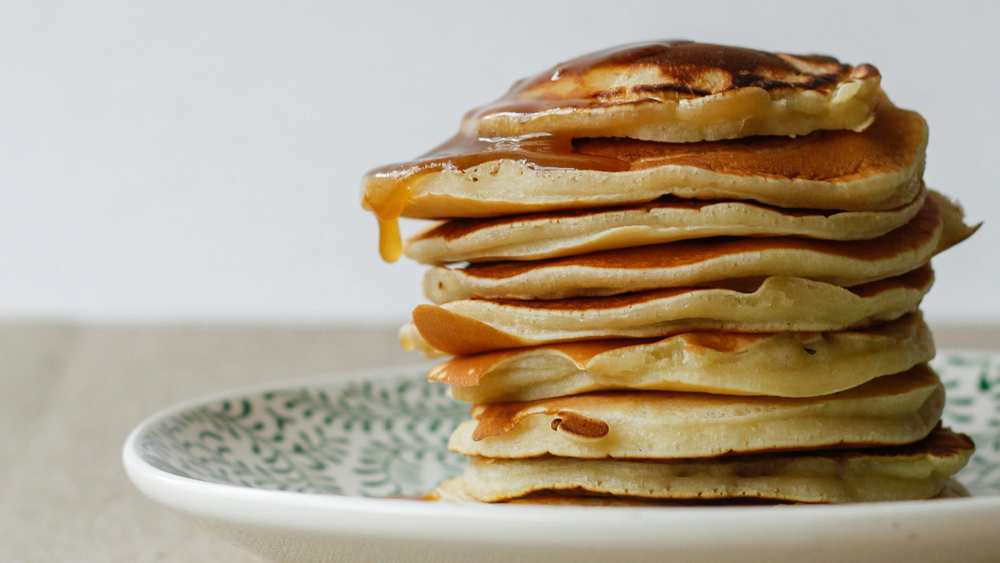
Sometimes, simple kitchen choices can seem complicated. Even choosing the right leavening agent for pancakes can become a real dilemma.
However, leavening is essential: it determines their texture and lightness. So, which leavening agent should you use to get fluffy and airy pancakes? Let's find out together!
Why is Leavening Important for Pancakes?
To make successful pancakes, the choice of yeast or another leavening agent is crucial. It's what allows the batter to rise and become light and fluffy. Without a leavening agent, the batter remains flat, and your pancakes will look more like simple crepes.
Leavening agents work by forming air bubbles in the batter, which create an airy texture that gives pancakes their characteristic thickness and lightness. It's precisely this texture that makes all the difference and ensures your pancakes are a success every time.
Baking Powder vs. Baker's Yeast: What's the Difference for Pancakes?
Many people confuse baking powder and baker's yeast, thinking they can be used interchangeably. However, these two leavening agents are quite different and produce very different results.
- Baking powder acts very quickly thanks to a reaction between baking soda and an acid. When it comes into contact with liquid or heat, it releases carbon dioxide, which forms air bubbles in the batter and makes it rise. It's perfect for quick recipes, like pancakes, as it doesn't require any resting time.
- Baker's yeast, on the other hand, works through a fermentation process. The microorganisms it contains convert sugars in the dough into gas, but this takes more time. This is why it's typically used for recipes like bread or brioches, where a resting time is necessary to achieve a thick and airy texture.
Why Choose Baking Powder for Classic Pancakes?
For pancakes, baking powder is preferred because it's faster and perfectly suited to this recipe. No resting time is needed: it acts immediately, making it the ideal choice for fluffy pancakes in no time.
It's the essential leavening agent to use for perfectly fluffy and airy classic pancakes for the following reasons:
- Easy to use: No resting time required; it acts immediately.
- Easy to find: Available in all grocery stores.
- Neutral taste: It doesn't alter the natural flavor of your pancakes.
- Guaranteed results: It consistently produces light and airy pancakes.
If you're looking for simplicity and effectiveness, baking powder is your best ally for perfect pancakes.
How to Properly Use Baking Powder for Successful Pancakes?
- Dosing: For an ideal dosage, add about one teaspoon of baking powder for every 250g of flour.
- Mixing: It's important to incorporate the baking powder into the dry ingredients before adding the liquids to ensure even distribution throughout the batter.
- Cooking: Finally, be sure to cook the batter immediately after preparation, as baking powder begins to act as soon as it comes into contact with liquids, thus ensuring a fluffy and well-risen result.
Handy tip: If you're wondering if it's possible to prepare pancake batter the day before, note that it's not recommended with baking powder, as it loses its effectiveness. It's best to prepare the batter just before cooking to maintain its fluffiness.
What About Baking Soda?
You've probably heard that baking soda can replace baking powder in some recipes. Indeed, it produces gas that helps batters rise, provided it's activated by an acid (like lemon).
Used carefully and in combination with an acidic ingredient, baking soda can effectively leaven a batter, similar to baking powder. It's a good substitute when you don't have baking powder available.
My pancake recipes
Ready to give it a go? Here are a few of my pancake recipes:
Conclusion
In conclusion, for perfectly fluffy and airy pancakes, baking powder is your best ally. Simple, quick, and effective, it guarantees a light texture and hassle-free preparation.
To extend the enjoyment, also consider what comes next: keeping your pancakes fluffy after cooking, reheating them without drying them out, or even freezing pancake batter to save time another day. And if you like to perfect the presentation, there are also some simple tips to get perfectly round pancakes.