 Written by
Fluffy, golden, and tall… that's everything we expect from a homemade pancake recipe. But whether it's batter that's too thin, failed cooking, or a rubbery texture, it doesn't take much to mess up this seemingly simple recipe.
So, how do you make perfect pancakes every time? Follow our precise advice for flawless pancakes.
Choose Your Ingredients Carefully
Flour: The Base of the Texture
Opt for T45 or T55 wheat flour. It yields airy and tender pancakes. You can also mix in a little whole wheat or oat flour for added flavor.
Eggs
Eggs bind the batter and give it some structure. The right proportion: 1 egg for approximately 100 to 120g of flour. Too many eggs will make your pancakes dense; too few will make them crumbly. It's also better to use room-temperature eggs for a more homogeneous batter.
Milk
The choice of milk significantly impacts the fluffiness. For extra-tender and thicker pancakes, buttermilk is one of the best choices. It reacts with baking powder to make the batter rise and gives it a very pleasant, slightly tangy taste.
If you don't have buttermilk, whole or semi-skimmed milk also works. Plant-based milks are an option, but some (like rice milk) are too sweet or too thin.
Fat
A small amount of fat in the batter makes pancakes more tender. Add 1 to 2 tablespoons of melted butter (or a neutral oil like sunflower oil). This also helps prevent them from sticking to the pan.
Baking Powder
It's impossible to get thick, fluffy pancakes without baking powder. It's what makes the batter rise during cooking and gives it that beloved soft texture. Generally, 1 packet of baking powder (10 to 11g) is used for 250g of flour.
If you're wondering which yeast to use for pancakes, always choose baking powder (or baking soda combined with an acid). Do not use baker's yeast: it requires proofing time, which is not suitable for quick pancakes.
Mastering Pancake Batter
Do Not Overmix
A common mistake: wanting ultra-smooth batter. However, over-beating batter develops gluten, which makes pancakes elastic. Mix gently with a whisk or spatula, just enough to incorporate the ingredients.
Resting Time: Useful but Not Mandatory
Letting the batter rest for 15 to 30 minutes allows bubbles to form and flavors to develop. It's not essential, but it improves the texture.
Cooking: The Crucial Step
Properly Heat the Pan
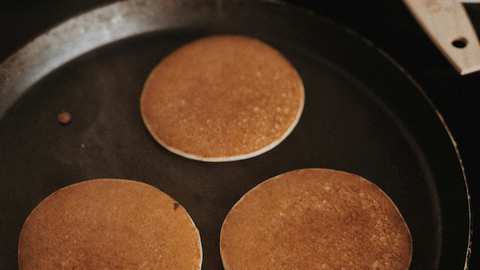
Use a non-stick pan over medium heat. Too hot, the pancake will burn without cooking inside. Not hot enough, it won't rise. Test with a drop of water: it should sizzle gently.
Lightly Grease
A little melted butter or neutral oil is sufficient. Use a brush or paper towel to avoid excess.
Flip at the Right Time
When small bubbles form on the surface and the edges appear set, it's time to flip: 15 to 20 seconds of cooking on the second side is enough.
Do Not Flatten Them
Once flipped, do not press your pancakes with the spatula! This crushes the air bubbles that make them fluffy and thick. Let them cook undisturbed to maintain a light texture.
For Crispy, Golden Edges
To add a gourmet touch to your pancakes, gently swirl them in the pan just after flipping. This simple gesture helps to brown the edges and gives them a delightful subtle crispiness. An easy tip to make a difference!
Tips for Perfect Pancakes
- Use a ladle or measuring spoon to pour the same amount of batter each time. This creates consistent pancake sizes and shapes.
- If you're wondering how to make perfectly round pancakes, pouring the batter directly into the center of a hot pan will naturally make it spread into a circle.
- Use a thick-bottomed, preferably non-stick, pan. It distributes heat better and allows for even cooking without sticking.
My pancake recipes
Ready to give it a go? Here are a few of my pancake recipes:
Conclusion
Making perfect pancakes is primarily about good technique and the right ingredients. A well-proportioned batter, controlled cooking, and a little patience are all it takes to get fluffy and delicious pancakes every time.
And if you like to plan ahead, good news: you can prepare the batter the day before, store it in the fridge, and cook your pancakes the next day. Once cooked, they also keep very well: you can store them in the fridge for a few days, freeze them, or even gently reheat them in a pan or toaster.
All that's left is to choose your favorite toppings and enjoy!