 Written by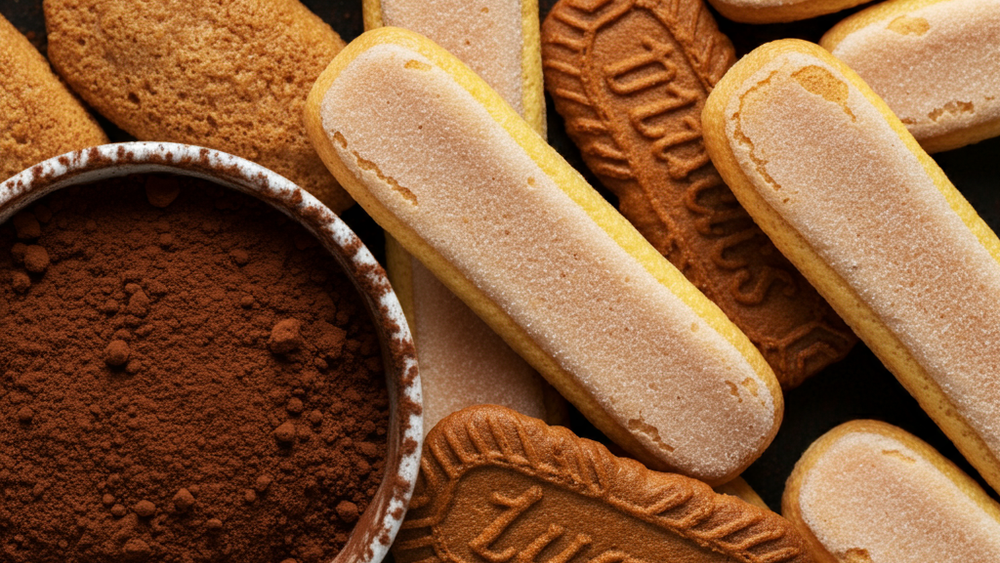
The tiramisu is an Italian dessert everyone loves for its rich, smooth taste. The key to making it successfully is choosing the right biscuits. They form the base of the tiramisu, soak up the coffee flavor, and make the dessert soft.
While the classic recipe uses ladyfingers (or savoiardi in Italian), several options can be considered depending on your preferences or what you have on hand. So, which biscuit should you choose to elevate your tiramisu? Let’s explore the different possibilities.
Ladyfingers (Savoiardi): The Traditional Choice
Ladyfingers are the most commonly used biscuits in the traditional tiramisu recipe. Their light and airy texture allows them to absorb coffee while maintaining some firmness, preventing the dessert from becoming too soft. Moreover, their low sugar content perfectly balances the other flavors of the tiramisu.
- Pros: Light, absorb coffee well, maintain a firm texture.
- Cons: Can be difficult to find in some regions.
Spoon Biscuits
Spoon biscuits are often used as an alternative to ladyfingers. They have a similar texture but are a little softer. This can be an advantage if you like a tiramisu that melts in your mouth a bit more. However, their liquid absorption capacity is slightly lower than ladyfingers, so be sure to adjust the amount of coffee.
- Pros: Soft texture, easy to find.
- Cons: Absorb less liquid, which can make the tiramisu softer.
Speculoos
If you’re looking to add an original touch to your tiramisu, speculoos can be an excellent choice. Their spicy caramel flavor pairs perfectly with mascarpone and coffee. Be aware, however, that they are sweeter than ladyfingers, so you’ll need to adjust the amount of sugar in the recipe to avoid a dessert that’s too sweet.
- Pros: Provide an original spicy flavor, crunchy texture before soaking.
- Cons: Sweeter, can alter the traditional taste of tiramisu.
Graham Crackers
If you’re in the United States or other regions where ladyfingers are hard to find, Graham crackers can be an interesting alternative. Their dense texture and slightly sweet taste pair well with mascarpone. However, they tend to absorb more liquid, so be careful not to over-soak them to avoid a soggy tiramisu.
- Pros: Hold their shape well when cut, easy to layer in the dish, mild and familiar flavor.
- Cons: Hard to find outside English-speaking countries.
Pavesini Biscuits
Pavesini are another option commonly used in Italy. They are thinner than ladyfingers and provide a lighter texture to tiramisu. Their absorption capacity is lower, but they can be perfect for a lighter dessert.
- Pros: Light, make for a softer tiramisu.
- Cons: May be too thin for those who prefer a firmer texture.
Homemade Biscuits
For baking enthusiasts, it’s entirely possible to prepare homemade biscuits for your tiramisu. You can make homemade ladyfingers or personalized variations according to your taste. This option allows you to control the texture and sweetness, but it requires a bit more time and effort.
- Pros: Full control over ingredients, more customizable.
- Cons: Requires more time and preparation.
How to Choose the Right Biscuit for Your Tiramisu?
The choice of biscuit depends on your personal preferences and the desired effect. If you want to stick to Italian tradition, opt for ladyfingers. If you like to experiment, why not try speculoos or Graham crackers? The important thing is to maintain the balance between liquid absorption and the biscuit’s firm texture to achieve a well-structured tiramisu.
Also, consider all the elements that make up your dessert: a sweeter biscuit, for example, might pair better with intense cocoa. Speaking of which, if you’re wondering what cocoa to choose for your tiramisu, unsweetened cocoa remains the standard, but there are milder or more aromatic alternatives depending on your taste. And to finish beautifully, don’t forget that the way you dust the cocoa matters as much as its choice.
Tips for Perfecting Your Tiramisu with Any Biscuit
- Don’t over-soak: Whatever biscuit you choose, avoid over-soaking them in coffee. Dip them quickly to prevent them from becoming too soft. And if coffee isn’t a crowd-pleaser, it’s entirely possible to customize the recipe by choosing a coffee alternative, such as a rich hot chocolate or a gourmet infusion. Carob powder, for instance, offers a milder alternative with a caramel touch.
- Adjust sugar quantity: If you use sweet biscuits like speculoos, adjust the amount of sugar in the mascarpone cream to avoid an overly sweet dessert. The choice of sugar also plays an important role in the final balance of the tiramisu, depending on its fineness, flavor, or sweetness level.
- Use biscuits with different textures: For a more sophisticated tiramisu, combine biscuits with slightly different textures. For example, you can mix traditional ladyfingers with crunchier biscuits like speculoos. This will provide a pleasant contrast in textures.
My tiramisu recipes
Ready to give it a go? Here are a few of my tiramisu recipes:
- Tiramisu
- Chocolate and Mascarpone Mousse
- Cyril Lignac's Chocolate and Mascarpone Cake
- Lemon Pistachio Tiramisu
Conclusion
Beyond the biscuit choice, making a good tiramisu also means considering the whole: texture, flavors, and even storage. Once assembled, it’s best to let it rest for several hours, even overnight, for the flavors to meld harmoniously. And to keep its freshness intact, it’s better to cover it in the fridge and consume it within the proper timeframe.
Also, think about the dish you use: a glass or ceramic dish of appropriate size allows for a beautiful presentation and clean slices when serving. To save time, also consider if you can freeze tiramisu: it’s a practical tip that allows you to prepare it in advance without losing any flavor.
In short, whether you stick to the classic recipe or prefer variations, the essential thing is to find the balance that you enjoy. That’s the secret to a successful tiramisu.